Blow Moulding Machine
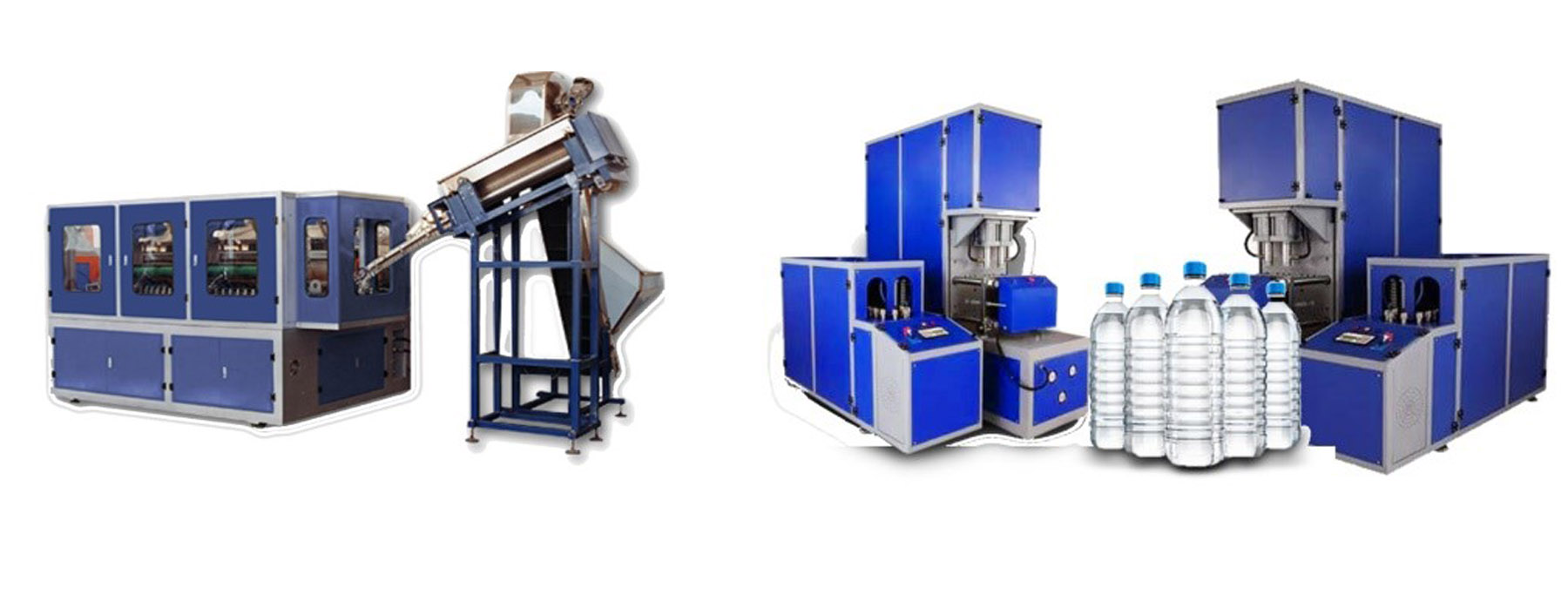
Blow moulding machines are used to manufacture hollow plastic parts by inflating a heated plastic tube until it takes the shape of a mould cavity. These machines can be categorized based on their level of automation: automatic and semi-automatic. Below is a comparison of their typical specifications:
🔧 Automatic Blow Moulding Machine Specifications
These machines run with minimal human intervention, offering high production rates and consistency.
Feature | Specification |
Operation | Fully automated – integrated systems for preform loading, heating, blowing, and ejection |
Production Speed | High – 1000 to 12,000 bottles/hour (varies by model) |
Cavity Options | 1 to 12 cavities |
Bottle Volume Range | 50 ml to 5 liters (can go higher with specialized machines) |
Heating System | Infrared heaters with precise temperature control |
Control System | PLC with HMI touchscreen interface |
Automation | Robotic arm / Conveyor-based systems |
Air Consumption | 1 – 3 m³/min per cavity (varies) |
Power Consumption | 15 – 60 kW depending on size and type |
Application | Suitable for mass production of PET bottles (e.g., beverages, cosmetics, pharmaceuticals) |
Labor Requirement | Low (1 operator for monitoring and quality check) |
Cost | Higher initial investment |
⚙️ Semi-Automatic Blow Moulding Machine Specifications
These machines require manual intervention for loading preforms and collecting finished products.
Feature | Specification |
Operation | Manual preform loading and bottle removal; automatic heating and blowing |
Production Speed | Medium – 300 to 1500 bottles/hour |
Cavity Options | 1 to 2 cavities (sometimes 4) |
Bottle Volume Range | 100 ml to 20 liters |
Heating System | Manual or semi-auto infrared heating |
Control System | Basic PLC or manual switches |
Automation | Partial – operator handles loading/unloading |
Air Consumption | 0.8 – 2.5 m³/min |
Power Consumption | 10 – 30 kW |
Application | Ideal for small-scale production, customized batches, or startups |
Labor Requirement | Higher (1 operator per machine) |
Cost | Lower initial investment |
✅ Key Differences
Feature | Automatic | Semi-Automatic |
Automation Level | High | Medium |
Labor Requirement | Low | High |
Productivity | High | Medium |
Cost | High | Lower |
Ease of Use | More complex (but user-friendly) | Simpler to learn |
Best For | High-volume manufacturing | Low-volume or startup production |